

Designing PAT-Ready Glass Reactors: What Process Chemists Must Specify Before the Vessel Is Built
PAT-readiness must be designed before a glass vessel is built, because probe ports and their geometry cannot simply be relocated…
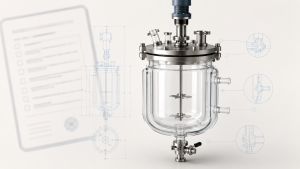
Specifying a GMP-Compliant Glass Reactor: An Engineer’s Framework
A GMP-compliant reactor is not a standalone label; it is equipment designed, documented, qualified, and maintained to support a validated…

How to Choose a Laboratory Reactor Setup for Crystallization, Precipitation and Controlled Cooling Workflows
Crystallization and precipitation are often treated as chemistry problems first and equipment problems second. In practice, the reactor setup can…

Cleaning Validation for Glass Reactors: A Deep Dive into Cleaning Protocols
In the high-stakes world of pharmaceutical manufacturing, purity is not just a goal; it is a regulatory mandate. For laboratory…

Glass Bioreactors: Transparent Tools Driving Innovation in Modern Biotechnology
In biotechnology, everything revolves around control. A few degrees too warm, a pH slightly off, or oxygen running low —…

From Flask to Floor: Overcoming Scale-Up Challenges in Pharmaceutical Synthesis
Scaling up chemical synthesis from laboratory experiments to pilot-plant or industrial production is quite a challenge in pharmaceutical R&D. While…

Glass Reactors in Pharmaceutical Research: Case Studies and Best Practices
Glass Reactors in Pharma R&D: Why Customization Matters Modern pharmaceutical R&D labs rely on glass reactor systems for synthesis, process…