
Lab-Scale Distillation for Solvent Recovery: Designing a Recovery Train That Delivers Reusable Solvent
A solvent-recovery train should be specified from the quality the recovered solvent must meet for reuse. Separation method, vacuum and...
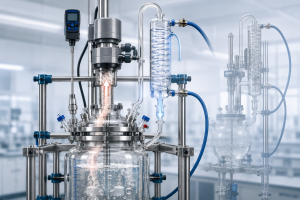
How to Specify Reflux and Condenser Setups for Laboratory Glass Reactors
Reflux looks simple on a bench: heat the reaction, condense the vapour, return the condensate to the vessel. In process...

When to Integrate Filtration into a Glass Reactor Workflow
Filtration should be considered with the reactor workflow when transfer loss, exposure to air or moisture, blocked filters, cleaning, containment,...

Why Precision Control Is Important for Distillation Processes
Precision control in distillation means maintaining a reproducible reflux ratio and thermal balance throughout a separation process. Stabilizing reflux, using...

Lab-Scale Distillation for Solvent Recovery: Reducing Waste in Pharma R&D
Solvent Recovery in Pharmaceutical R&D: Making Every Drop Count In pharmaceutical R&D, solvents are everywhere: facilitating reactions, enabling purifications, and...

Mastering Multistep Synthesis: Integrating Separation and Drying in One Setup
Mastering Multistep Synthesis: Integrating Separation and Drying in One Setup Pharmaceutical and fine chemical researchers often find multistep synthesis complicated....
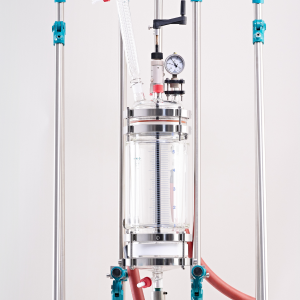
Precision Filtration in Glass: How the HWS Filtration Unit Elevates Laboratory Efficiency
Author: HWS Mainz Laboratory Engineering TeamPublished by HWS Mainz – Specialists in Custom Laboratory Glass Systems and Process Technology Introduction:...